


What is Glioblastoma (GBM)?
Glioblastoma (also known as Glioblastoma multiforme or GBM) is an aggressive cancerous (malignant) tumor that develops in the brain or spinal cord. Glioblastoma forms from cells called astrocytes that support nerve cells. GBM usually begin as a grade 4 tumor, which means it’s the fastest growing of all brain tumors.
There is currently no cure for glioblastoma. Fewer than 10% of patients live more than five years after diagnosis, and nearly all experience disease relapse following initial treatment.
Current standard-of-care therapy involves surgical resection, radiation therapy (RT), and/or chemotherapy (e.g., temozolomide; TMZ). However, acquired chemoresistance is common, and response rates to a second cycle of TMZ chemotherapy in recurrent gliomas are less than 10%.
Recent studies have highlighted the critical role of mitochondrial dysfunction in GBM progression, including altered protein expression, metabolic reprogramming, mitochondrial-dependent regulation of apoptotic (programmed cell death) pathways as well as a high glycolytic phenotype (Warburg effect).
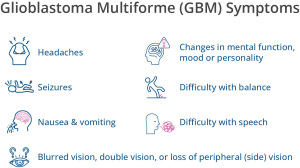
*GBM symptoms vary from person to person.
BPM31510 GBM Clinical Trial Status
BPGbio recently completed enrollment of a Phase 2b clinical study evaluating BPM31510 in subjects with newly diagnosed glioblastoma (GBM). This single arm, non-randomized, multicenter, US-based open-label trial was designed to assess the safety and efficacy of BPM31510 followed by standard of care therapy (radiation and concurrent temozolomide treatment).
Primary endpoints of the study are progression-free survival at 6 months (PFS6) and 12 months (PFS12); secondary endpoints include overall survival and safety.
Latest Trial-in-Progress Update
Interim data from the Phase 2 study of BPM31510 combined with vitamin K, presented on June 1, 2026 at the American Society of Clinical Oncology (ASCO) Annual Meeting, demonstrated encouraging signs of activity in patients with newly diagnosed GBM receiving standard chemoradiation. Specifically:
- BPM31510 is well-tolerated and does not exacerbate toxicity of chemoradiation with no new drug related SAEs encountered in treatment naïve patients in a front-line setting.
- Preliminary efficacy signal shows median overall survival of 29.3 months (95% CI: 12.8, NR) in MGMT unmethylated patients — approximately double the historical control of ~14.6 months.
- Median OS for methylated subgroup has not yet been reached.
Click here for full poster presentation.

BPM31510 targets mitochondrial metabolic vulnerability in GBM.
How does BPM31510 for Glioblastoma Multiforme (GBM) Work?
GBM is characterized by altered metabolic activity, including reduced CoQ10 levels resulting in impaired oxidative phosphorylation and increased reliance on glycolysis compared to normal neural tissue. BPM31510 is a novel drug-lipid conjugate nanodispersion that delivers high levels of oxidized CoQ10 following IV infusion. Preclinical studies demonstrate that BPM31510 induces metabolic rewiring in GBM cells and promotes the generation of reactive oxygen species (ROS), resulting in selective apoptosis (programmed cell death) of cancer cells.
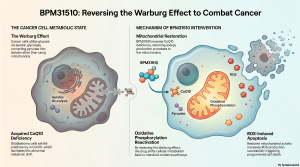
BPM31510 is under investigation as a treatment for several cancers, including glioblastoma and pancreatic cancer, often in combination with standard therapies.
BPM31510 is not yet approved by the FDA.
GBM Clinical & Scientific Posters
For more posters head to our poster archive here.
