
What is Epidermolysis Bullosa (EB)?
Epidermolysis Bullosa (EB) is a group of rare inherited connective tissue disorders characterized by extremely fragile skin, chronic blistering, and impaired wound healing.
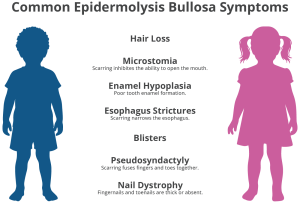
Patients living with EB can experience painful wounds, recurrent infections, scarring, impaired mobility, and significant quality-of-life burden.
In severe forms of the disease, even minor friction or everyday physical contact can result in substantial skin injury and chronic open wounds. Blisters and sores may also develop inside the body, such as in the mouth, esophagus, stomach, intestines, upper airway, bladder, and genitals.
Most cases of Epidermolysis Bullosa (EB) are caused by inherited genetic mutations that affect proteins responsible for maintaining skin structure and integrity. These mutations alter how the body produces proteins that help anchor the layers of the skin together and maintain tissue strength. When these proteins do not form or function properly, the skin layers do not bind normally, resulting in skin fragility, tearing, and blistering.
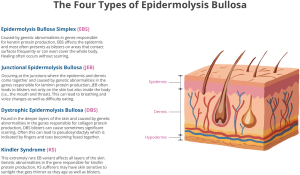
Research indicates that one in every 20,000 children in the U.S. is born with the disease.
There is currently no cure for EB, and treatment options are limited, making it a difficult disease for patients and their families to manage.

BPGbio’s BPM31510 for EB has received FDA Orphan-Drug Designation.
Why Mitochondrial Function Matters in EB
Mitochondria play a central role in cellular repair processes, including inflammatory signaling, cellular proliferation, oxidative stress regulation, and tissue remodeling — all of which are critical components of wound healing biology.
Research suggests that mitochondrial dysfunction and impaired cellular energy metabolism may contribute to delayed wound healing, chronic inflammation, and tissue fragility observed in EB.
BPM31510 is being investigated as a mitochondrial metabolic modulator designed to influence these biological pathways.
How Does BPM31510 for Epidermolysis Bullosa (EB) Work?
BPM31510 is an investigational therapy designed to modulate mitochondrial metabolism through a proprietary oxidized CoQ10 (ubidecarenone) lipid nanodispersion formulation intended to enhance tissue delivery and local cellular uptake.
CoQ10 is a critical component of mitochondrial oxidative phosphorylation and cellular energy production. BPM31510 is being studied for its potential to influence biological pathways associated with:
- cellular energy metabolism
- oxidative stress responses
- inflammatory signaling
- tissue remodeling
- wound healing processes
Preclinical studies suggest BPM31510 may influence multiple stages of the wound healing cascade, including inflammation, proliferation, and remodeling pathways involved in tissue repair and skin integrity.
BPM31510 is being evaluated as a topical investigational therapy for wound management in patients with EB.
BPM31510 EB Clinical Trial Status
BPGbio completed a Phase 1 clinical study evaluating BPM31510 in patients with Epidermolysis Bullosa and is advancing the program toward further clinical development.
Preliminary findings from the Phase 1 study suggested BPM31510 appeared to be generally well tolerated, with early observations supporting continued investigation of its potential role in wound healing management.
Additional preclinical studies have demonstrated biological activity across pathways associated with tissue repair and mitochondrial metabolism.
Key Program Highlights
- Topical investigational therapy
- Phase 1 clinical study completed
- FDA Orphan Drug Designation
- FDA Rare Pediatric Disease Designation
For more information about BPGbio’s BPM31510 Epidermolysis Bullosa (EB) trial, please click here.
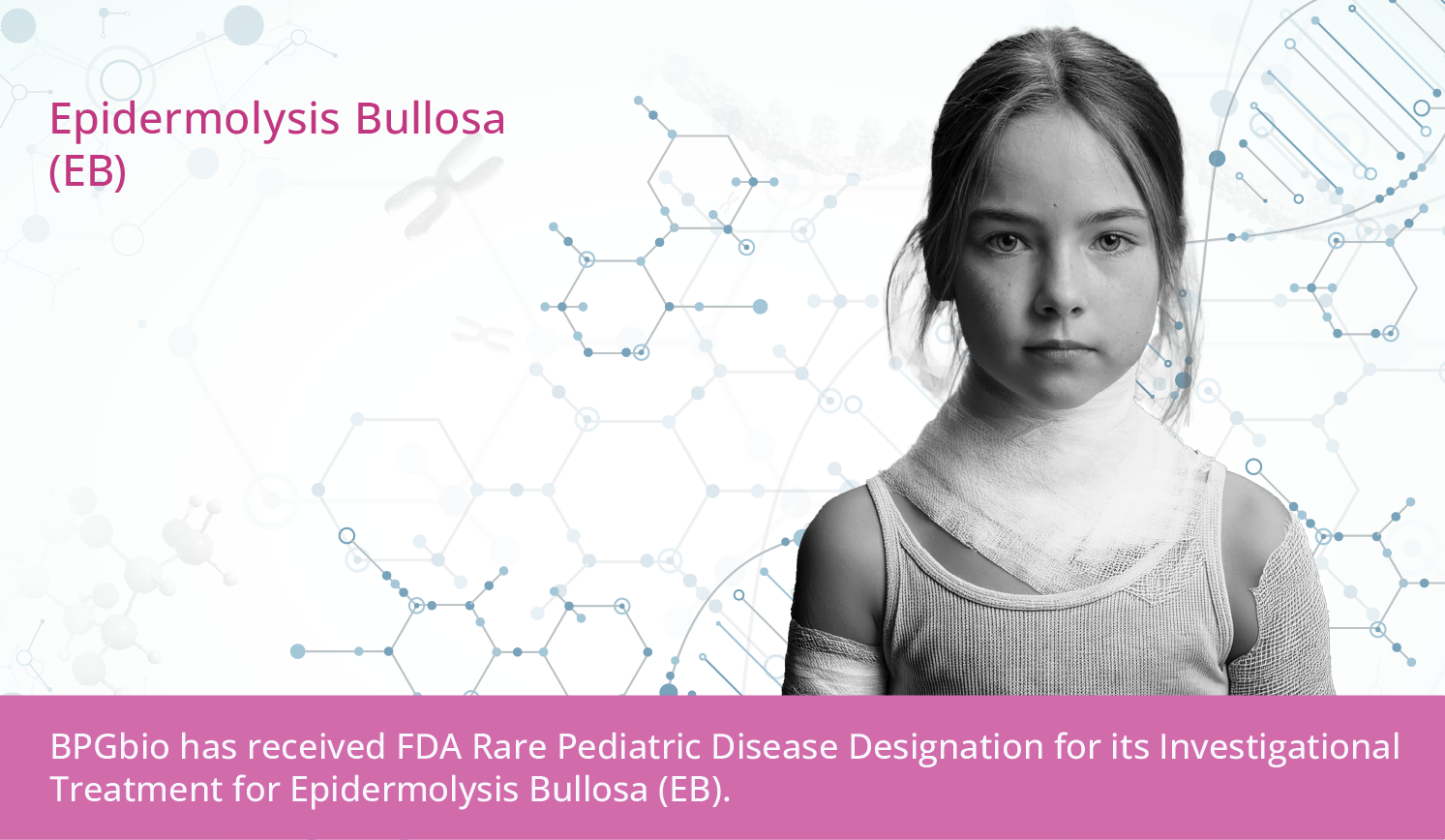
BPGbio received FDA Rare Pediatric Disease Designation for its Investigational Treatment for Epidermolysis Bullosa.
BPM31510 is not yet approved by the FDA.
BPGbio has Partnered with debra of America to Support EB Patients and Families

BPGbio has partnered with debra of America to support and advocate on behalf of patients and families affected by EB. debra of America is a non-profit organization that provides comprehensive support to those with epidermolysis bullosa (EB). It is the only national organization in the United States to offer free programs and services to affected individuals and their caregivers and fund research for an EB cure and treatment. By joining forces, we hope to galvanize the disease community and advance treatment research further.
The partnership creates a platform to elevate the EB disease profile by highlighting the potential EB treatments like BPGbio’s BPM31510 at key EB clinical conferences, strengthen EB patient advocacy efforts with Congress, and collaborate with top scientific investigators around the world. To learn more about the partnership, please click here.
In October 2017, BPGbio (then, dba BERG) was honored to be recognized as a Partner in Progress from debra of America.
“As a father of a ten-year-old with a severe form of Epidermolysis Bullosa, and as Executive Director, I want to thank BERG (BPGbio) for advancing necessary treatment options for the 25,000 people living in the United States with EB and the nearly 200 children born each year with the disease. debra of America is proud to honor BERG (BPGbio) with our Partners in Progress Award for their pioneering approach to drug development and their commitment to improving the quality of life for EB patients and their families.”
– Brett Kopelan, Executive Director of debra of America.
To read more, please click here.
